1. Introduction
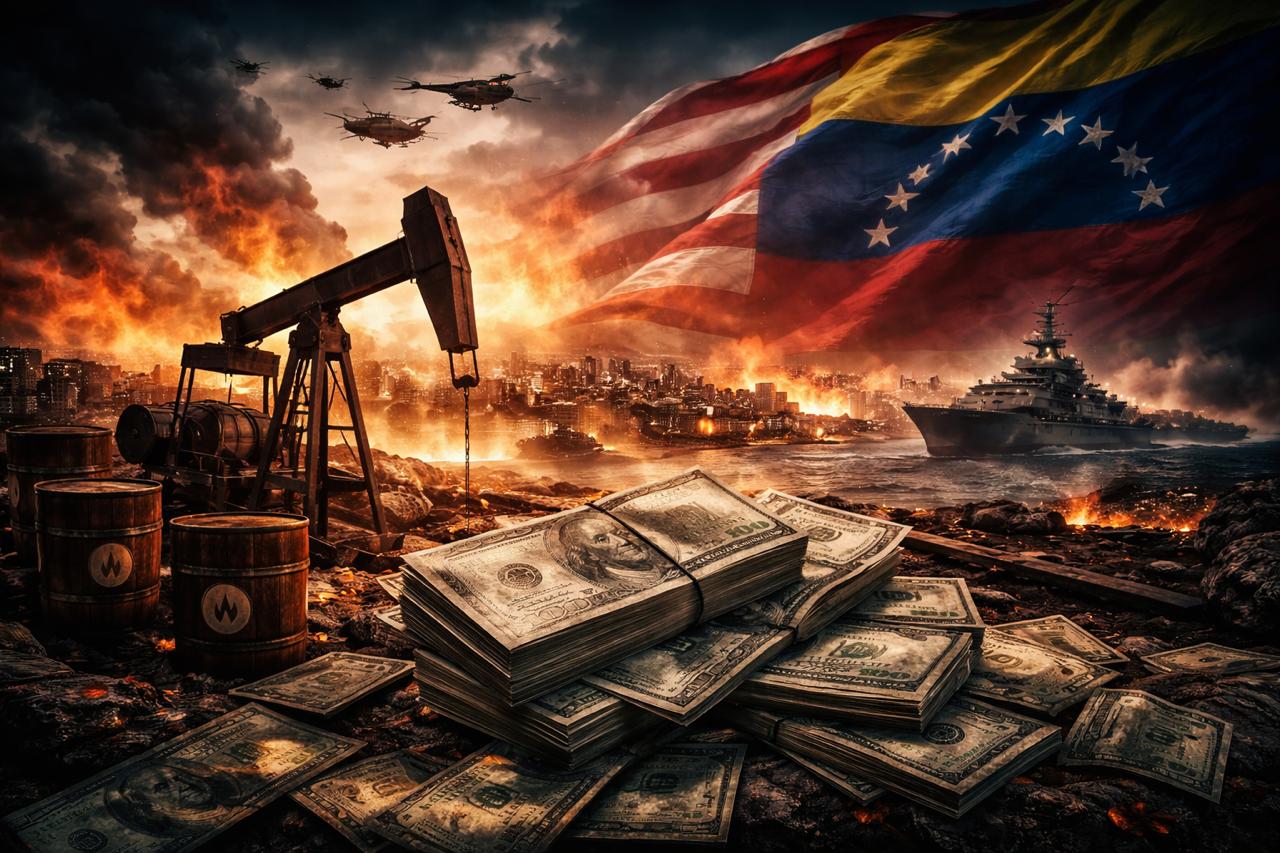
On 3 January 2026, the United States (U.S) conducted airstrikes near Caracas and deployed special forces in an operation that resulted in the capture of Venezuelan President Nicolás Maduro and his wife, Cilia Flores. Both were transferred to the United States to face federal charges relating to narcotics trafficking and “narco-terrorism.” Shortly thereafter, President Donald Trump stated that the United States now exercised effective control over Venezuela and would redirect its oil revenues toward stabilisation.
U.S. officials characterised the operation as a law-enforcement action targeting transnational criminal activity, while critics viewed it as a regime-change intervention driven by strategic and energy interests. This blog does not resolve that political dispute. Instead, it addresses the legal question: whether criminal allegations can lawfully justify the use of military force on foreign territory and the capture of a sitting head of state.
To do so, the analysis first outlines the allegations against Nicolás Maduro under U.S. domestic law, and then examines their implications under international law, focusing on sovereignty, the prohibition on the use of force, and head-of-state immunity.
2. The Allegations Against Nicolás Maduro
According to a superseding indictment filed by the United States in the Southern District of New York, Nicolás Maduro is alleged to have led and participated in decades-long criminal conspiracy involving large-scale cocaine trafficking to the United States. The indictment characterises this network as operating through corrupt Venezuelan state institutions and in partnership with transnational criminal and armed groups. All allegations remain unproven.
- Core Charges: The indictment brings four principal counts against Maduro:
- Narco-terrorism: Prosecutors allege that Maduro conspired to manufacture, distribute, and import cocaine into the United States while knowingly providing material support to organisations designated by the U.S. as Foreign Terrorist Organizations, including factions of the FARC, ELN, the Sinaloa Cartel, the Zetas (CDN), and Tren de Aragua.
- Cocaine importation and distribution: It is alleged that from at least 1999 to 2025, Maduro and co-defendants coordinated maritime and aerial drug shipments through Venezuela, Central America, and the Caribbean, involving multi-ton quantities of cocaine destined for U.S. territory.
- Possession of machineguns and destructive devices: The indictment alleges that Maduro and others possessed and used automatic weapons and destructive devices in furtherance of drug trafficking crimes.
- Conspiracy to possess machineguns and destructive devices: A related count alleges a conspiracy to possess such weapons during and in relation to the alleged narcotics offences.
- Use of Alleged State Authority : The indictment further alleges that Maduro abused official state functions to facilitate trafficking, including the use of diplomatic passports, state aircraft, military protection, and law-enforcement cover to shield drug shipments and proceeds from detection. Members of his family and inner circle are alleged to have participated in or benefited from these activities.
- Legal Significance: While the indictment asserts extensive criminal conduct under U.S. domestic law, the existence of charges does not itself determine the legality of Maduro’s capture under international law. Whether a sitting head of state may be forcibly seized on foreign territory remains a separate question governed by rules on sovereignty, use of force, and head-of-state immunity.
3. Lawsplained
1. Use of Force Under the UN Charter
Article 2(4) of the UN Charter prohibits the use of force against the territorial integrity or political independence of any state. The U.S. operation i.e., airstrikes combined with a commando raid inside Caracas is in breach of this article.
The recognised exceptions do not apply because:
- Venezuela did not consent to do so
- Moreover, under Article 53 the UN Security Council did not authorise the operation.
- Claims of self-defence under Article 51 are unconvincing. Drug trafficking and criminal conspiracies, however serious, do not constitute an “armed attack” attributable to a state. Expanding self-defence to cover criminal indictments would collapse the Charter’s limits on unilateral force.
2. Head-of-State Immunity
Under customary international law, sitting head of state enjoy personal immunity (immunity ratione personae) from foreign criminal jurisdiction. This immunity applies regardless of the gravity of allegations and exists to protect sovereign equality and stable international relations.
Narcotics trafficking and “narco-terrorism” are not international crimes subject to universal jurisdiction in the way genocide or war crimes are. International law provides cooperative mechanisms such as extradition, international tribunals, or proceedings after loss of office, not an unilateral abduction.
Forcibly transferring a sitting president to face domestic prosecution therefore violates established immunity principles.
3. Law Enforcement Is Not a Legal Shortcut
U.S. officials framed the operation as a law-enforcement action rather than an act of war. International law does not accept this distinction. Military force does not become lawful merely because it serves domestic criminal objectives. Allowing such reasoning would permit states to bypass sovereignty whenever criminal allegations are asserted.
4. Conclusion
The Venezuela crisis illustrates the fragility of the UN Charter system. The prohibition on force remains foundational in theory but bends under unilateral narratives of criminal justice and stabilisation. Normalising presidential seizures and resource control risks transforming international law from a constraint on power into a language used to justify it.
Future responses must prioritise multilateral safeguards: clearer limits on extraterritorial arrests, tighter oversight of sanctions regimes, and stronger insulation of resource flows from coercive force. Without such constraints, the principle of sovereignty risks becoming conditional- subject not to law, but to power.
REFERENCES
- https://www.chathamhouse.org/2026/01/us-attacks-venezuela-and-maduro-captured-early-analysis-chatham-house-experts
- https://www.britannica.com/question/Who-is-Cilia-Flores-the-wife-of-Nicolas-Maduro
- https://www.cbsnews.com/live-updates/venezuela-us-military-strikes-maduro-trump/
- https://www.latimes.com/world-nation/story/2026-01-03/timeline-of-us-militarys-buildup-strikes-against-venezuela-leading-to-maduros-capture
- https://www.pbs.org/newshour/nation/what-we-know-about-a-u-s-strike-that-captured-venezuelas-maduro
- https://www.cfr.org/backgrounder/venezuela-crisis
- https://govfacts.org/policy-security/international-relations/bilateral-relations/a-history-of-us-policy-toward-venezuela-from-monroe-to-maduro/
- https://www.importglobals.com/blog/venezuelas-oil-export-rebound-2025-and-beyond
- https://www.diplomacyandlaw.com/post/nicolas-maduro-s-arrest-legality-under-international-law
- https://www.aljazeera.com/news/2025/11/25/timeline-26-years-of-fraught-us-venezuela-relations
- https://www.reuters.com/world/americas/legality-us-capture-venezuelas-maduro-focus-united-nations-2026-01-04/
- https://www.atlanticcouncil.org/dispatches/us-just-captured-maduro-whats-next-for-venezuela-and-the-region/
- https://instituteofgeoeconomics.org/en/research/2026010701/#:~:text=The%20dollar%20dimension%20is%20important.%20By%20claiming,and%20reinforces%20global%20demand%20for%20dollar%20liquidity.
- https://export.sk/en/venezuela-oil-the-dollar-and-the-power-of-the-stronger/
- https://www.indiatoday.in/business/story/what-is-petrodollar-why-us-attack-venezuela-oil-dollar-explained-donald-trump-nicolas-maduro-2846630-2026-01-05#
- https://frontline.thehindu.com/world-affairs/de-dollarisation-us-empire-venezuela-nicholas-maduro-iraq-saddam/article70476918.ece
- https://illuminem.com/illuminemvoices/the-real-reason-why-the-us-overthrew-venezuela
- https://www.binance.com/en/square/post/12144282645345
- https://www.reuters.com/business/energy/chinas-oil-investments-venezuela-2026-01-05/
- https://www.un.org/en/about-us/un-charter/full-text
- https://www.justice.gov/opa/media/1422326/dl
Leave a Reply